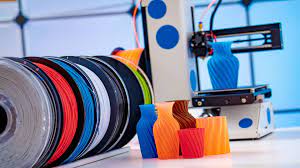
What Is 3d Printer Filament
Welcome to the fascinating world of 3D printing! Whether you’re a tech enthusiast, hobbyist, or just curious about this innovative technology, you’ve come to the right place. In today’s blog post, we’re diving deep into 3D printer filaments – those magical materials that bring your wildest creations to life!
With an array of options available in the market, it can be overwhelming for beginners to navigate the different types and understand their unique properties. But worry not! We’ve got you covered with this comprehensive guide that will demystify everything you need to know about 3D printer filaments.
So buckle up and prepare for an exciting journey as we explore the diverse landscape of filament materials, their strengths and weaknesses, and which one might be perfect for your next printing project. Let’s unravel these filament wonders from PLA to ABS, PETG to TPU!
But before we delve into each type individually (we promise it’ll be worth the wait!), let’s first understand what exactly a 3D printer filament is and why it plays a crucial role in bringing your designs from concept to reality.
Types of 3D Printer Filaments
Regarding 3D printing, the type of filament you use can significantly impact the quality and functionality of your printed objects. Several different types of filaments are available on the market, each with unique properties and characteristics.
One popular type of filament is PLA or polylactic acid. PLA is a biodegradable thermoplastic from renewable resources such as cornstarch or sugarcane. It is known for its ease of use and wide range of vibrant colors. PLA prints have a smooth surface finish and exhibit minimal warping during printing.
Another commonly used filament is ABS or acrylonitrile butadiene styrene. ABS is a solid and durable plastic that has excellent impact resistance. It is often used in applications where strength and durability are essential, such as functional prototypes or mechanical parts.
For those looking for more specialized properties, there are filaments like PETG, which combines the strength and durability of ABS with the ease of use of PLA. PETG has good chemical resistance and exhibits low shrinkage during printing.
If you need a heat-resistant filament, consider using nylon or PEEK (Polyether Ether Ketone). These materials can withstand high temperatures without deforming or losing their structural integrity.
Flexible filaments that allow you to print objects with rubber-like qualities are available. These thermoplastic polyurethane (TPU) filaments are great for creating items like phone cases or shoe soles.
In conclusion, that – let’s skip the conclusion this time! But hopefully, this brief overview gives you an idea of some common types of 3D printer filaments available today.
To wrap up our exploration of 3D printer filaments, let’s look closer at PLA (Polylactic Acid).
PLA is one of the most popular and widely used 3D printer filaments on the market. It stands out for its biodegradability and ease of use, making it an excellent choice for beginners. Made from renewable resources such as cornstarch or sugarcane, PLA is environmentally friendly and emits less harmful fumes when compared to other filament types.
One of the critical advantages of PLA is its low printing temperature requirement. This means that you can print with PLA using printers that don’t have high-temperature capabilities. Additionally, PLA has minimal warping tendencies, ensuring better print accuracy and stability.
In terms of aesthetics, PLA offers a smooth finish with vibrant colors. It also has good layer adhesion, producing solid prints without compromising quality.
However, it’s important to note that while PLA is great for many applications, it does have limitations. For instance, it has lower heat resistance than other filaments like ABS (Acrylonitrile Butadiene Styrene). Therefore, consider alternative filament options if your project requires exposure to high temperatures or outdoor environments where UV radiation may be present.
Exploring the world of 3D printer filaments opens up endless possibilities for creativity and innovation. Whether you choose ABS for its durability or PETG for its flexibility – each filament type brings unique characteristics to your creations.
As technology advances rapidly in this field – who knows what exciting developments lie ahead? So grab your favorite filament type and start bringing your ideas into reality!
Machines, Consumables and Parts Available from https://buythis.co.za/
For more info on Advanced Machinery visit https://am.co.za/
Subscribe to AM.CO.ZA’s YouTube Channel: https://www.youtube.com/@AchievementMatters?sub_confirmation=1
Chat with us by sending “hi” on WhatsApp to 060 600 6000.